Why handwriting is not a relic of the past — but one of the most powerful thinking and learning tools we are silently abandoning. CL Chief Learning Architect Ved International School · In Association with Easywrite · May 2026
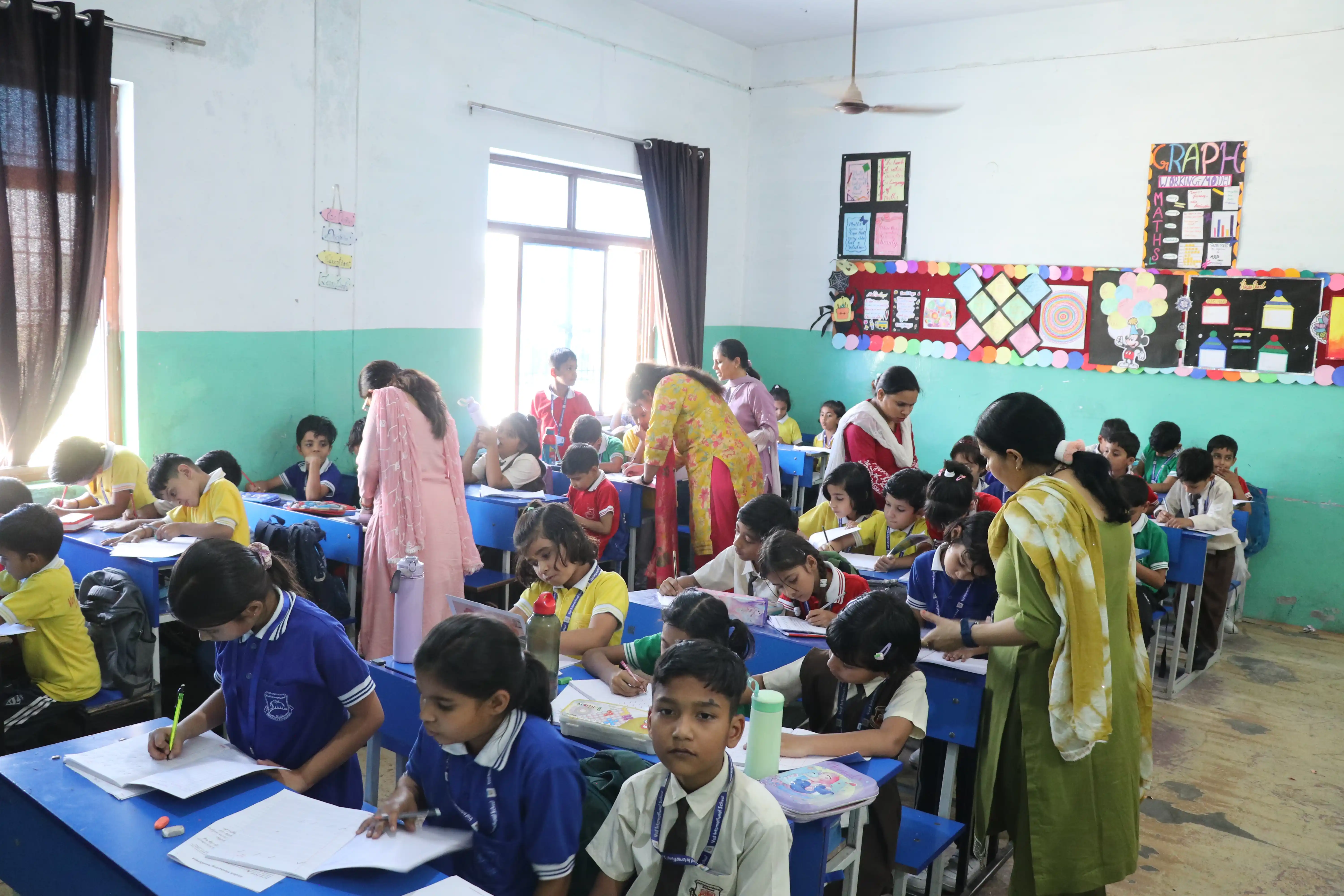
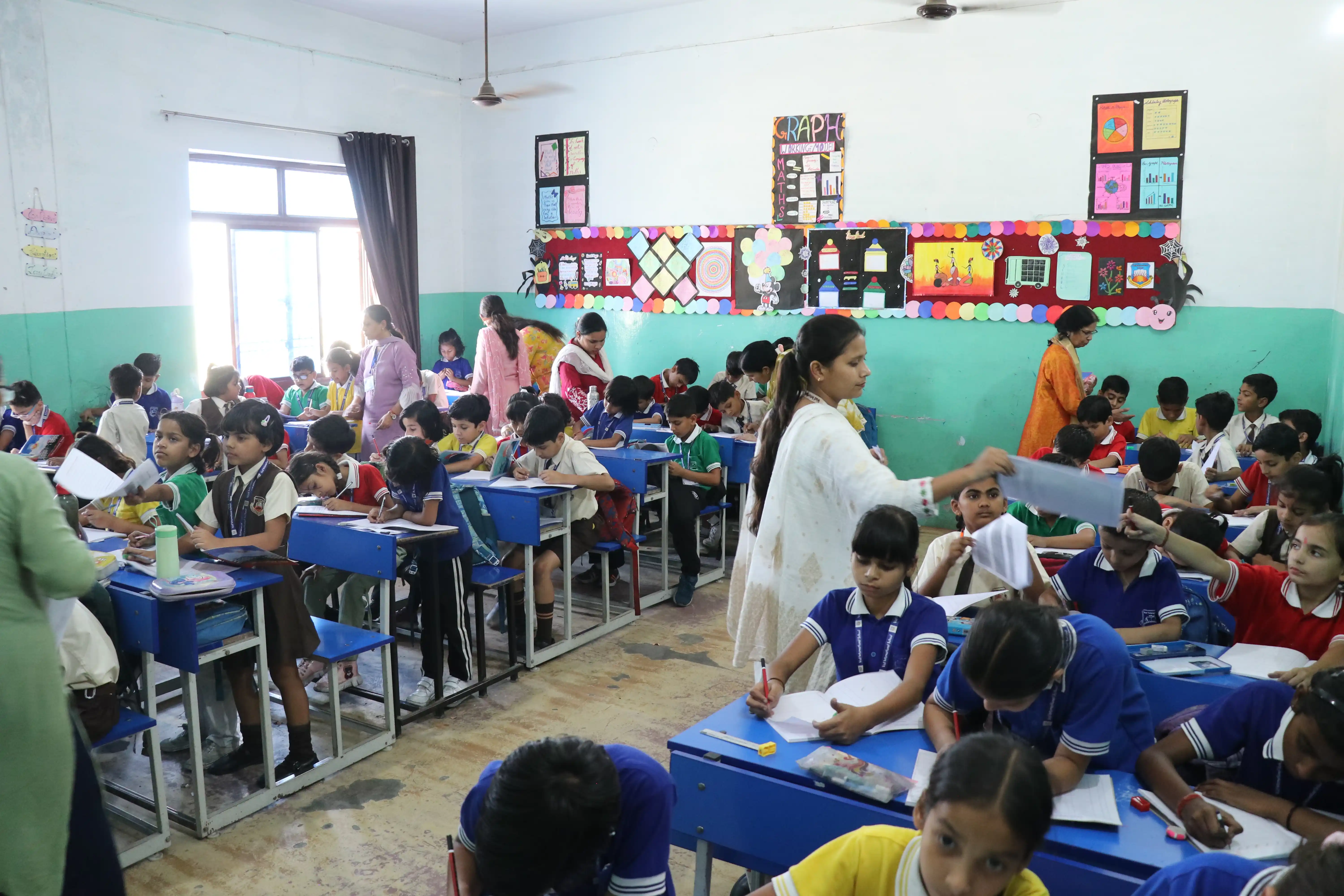
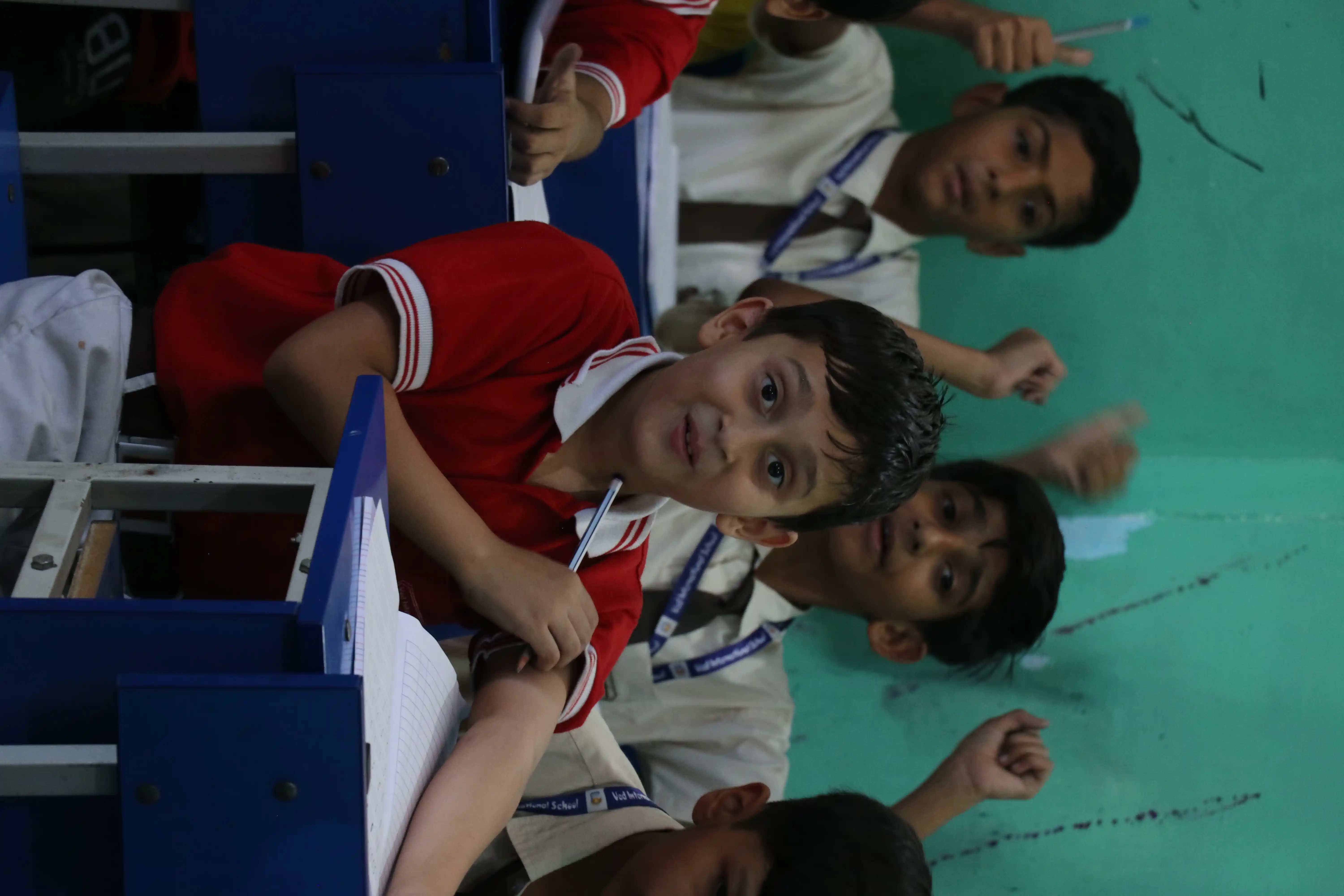
In a world racing toward touchscreens and voice commands, we paused. We picked up a pen. And we asked our students to do the same — for ve deliberate, focused, transformative days.
At VED International School, we have never viewed handwriting as a cosmetic skill — something to polish for report-card remarks or prizeday demonstrations. We see it for what neuroscience has been telling us for decades: the act of writing by hand activates deeper cognitive processing, strengthens memory encoding, and builds the very neural pathways that support structured thinking.
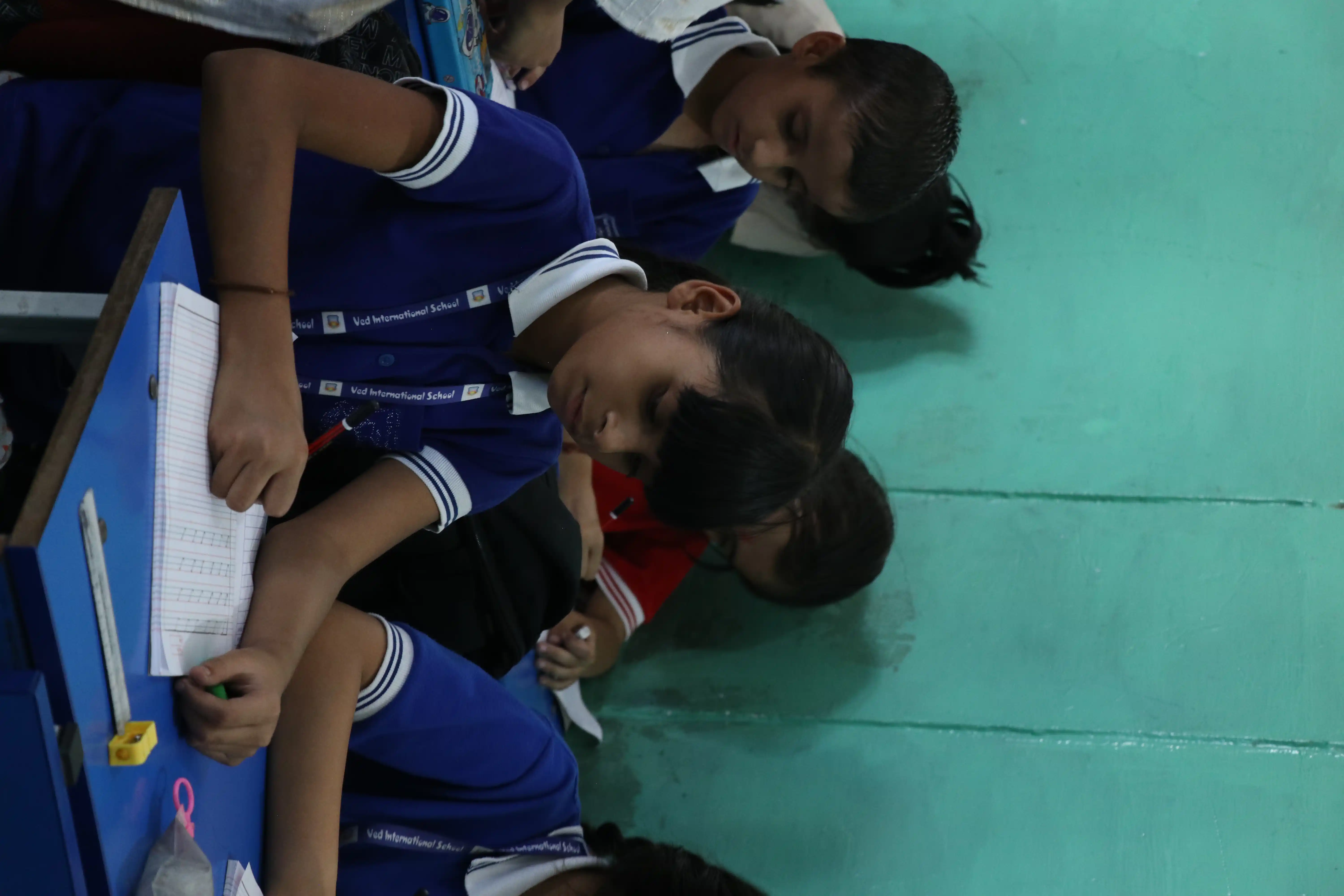
When a child forms a letter carefully — feeling the curve of an 'a', the lift before a 't' — the brain is not merely copying shapes. It is learning rhythm, sequencing, patience, and the satisfying discipline of doing something well with the body.
That is why this summer, as the Chief Learning Architect at VED, I chose to dedicate five full days — not a period, not an afterthought — to a Special Handwriting Improvement Course, designed in association with Easywrite, one of India's most thoughtful handwriting pedagogy programmes.
"When children learn to control the pen, they quietly learn to control the mind. e strokes on paper are only the visible part of something much deeper."
— CHIEF LEARNING ARCHITECT, VED INTERNATIONAL SCHOOL
The course was not designed as a speed-practice drill or a calligraphy exhibition. It was engineered as a progression — each day building deliberately upon the last, moving from the most foundational motor habits all the way to free, expressive, confident writing.
1. Basic Strokes & Line Awareness
Before letters, students master the foundational strokes that make all cursive possible — understanding ascenders, descenders, and the invisible architecture of ruled lines.
2. Joining Cursive Letters
Individual letters are brought into conversation with each other. Students learn the art of joining — maintaining consistent slant, rhythm, and spacing in one continuous, flowing motion.
3. Pangram Practice
All 26 letters meet in a single sentence. Pangrams challenge students to apply every skill simultaneously — a benchmark of completeness and confidence in the cursive alphabet.
4. Extended Passage Writing
Students write full passages in cursive — applying formation, slant, spacing, and joining together. This builds endurance and reveals how skills integrate under real writing conditions.
5. Story Writing & Fluency
The final day is about ownership. Students write 50-word and 5Students write 50-word and 100-word stories in their own hand — not practising handwriting anymore, but simply writing, naturally and beautifully.
Each day began with a Before sample from the student — unguided, natural handwriting — and ended with an After sample, the same passage written with awareness. The difference, even in 24 hours, is often remarkable. In five days, it is transformative.
The stories students copied were not generic filler text. Every passage was selected for its values, vocabulary, and emotional resonance. Students wrote about honesty, kindness, perseverance, teamwork, and responsibility — because the hand is also in the business of absorbing meaning. When Kabir returns a lost wallet, when Neha starts a "Save Our Books" campaign, when Rahul stops mid-race to help a fallen competitor — these are not just handwriting exercises. They are character formation, disguised as penmanship.
1. Fine Motor Control & Physical Confidence
The careful repetition of strokes builds genuine hand-eye coordination and muscle memory. Students who struggle with grip, pressure, and letterform begin to feel mastery — often for the first time.
2. Patience & the Discipline of Deliberate Practice
In an age of instant gratification, asking a child to slow down, look carefully, and redo a stroke is a radical act. It teaches them that effort applied patiently is how all quality comes into being.
3. Reading & Language Comprehension
When you copy a passage carefully — word by word, not just shape by shape — you read more deeply. Students absorb vocabulary, sentence structure, and ideas far more effectively than passive reading.
4. Self-Assessment & the Joy of Visible Growth
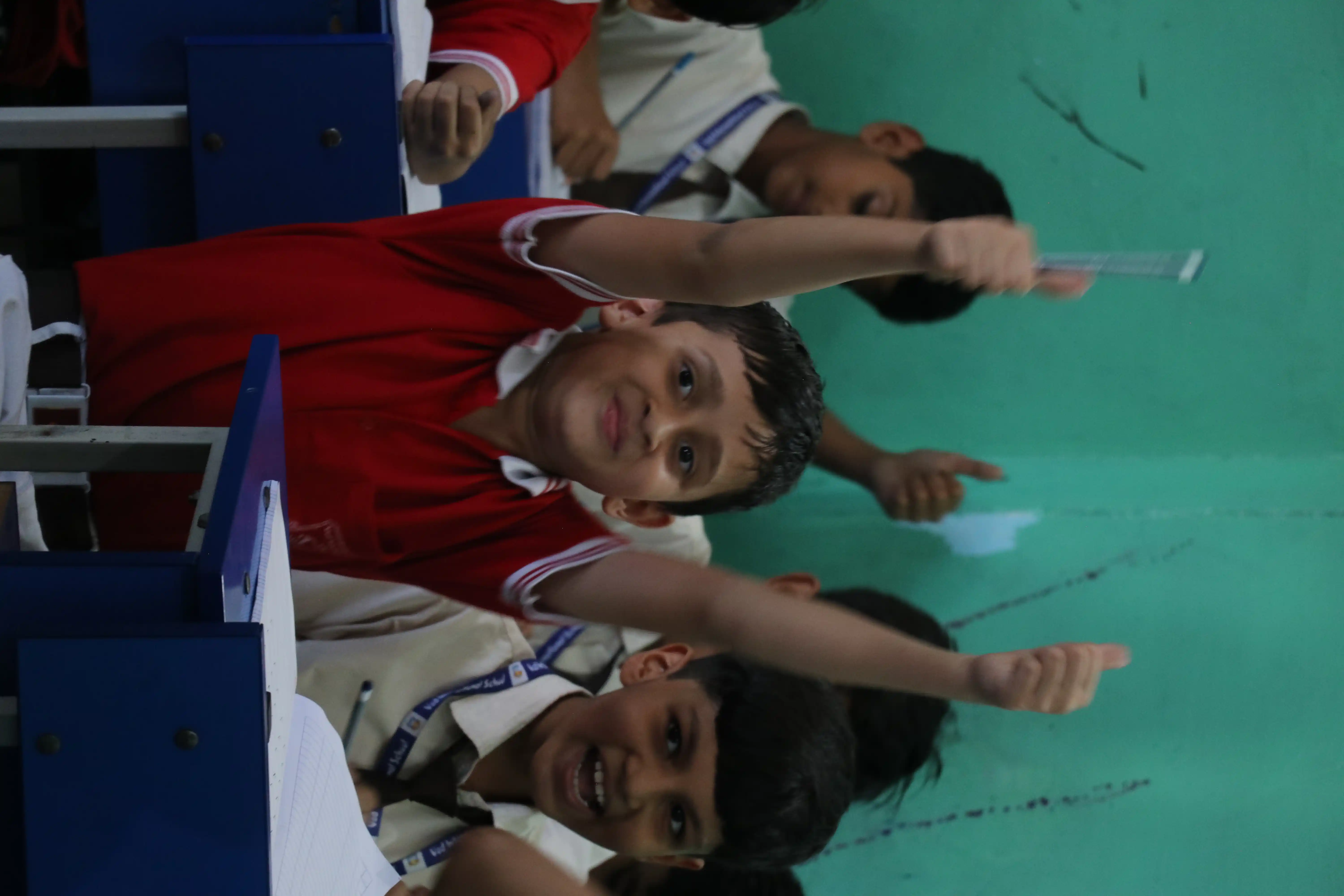
The Before-and-After structure is not just an assessment tool. It is one of the most motivating experiences a child can have in school — seeing concrete, undeniable evidence that they have improved through their own effort.
5. Pride in Personal Expression
Handwriting is the only form of expression that is uniquely, irreplaceably yours. No two people write identically. When students develop their handwriting, they are developing their voice — visible, personal, theirs.
The VED Next-Gen Summer Camp 2026 is built on a single conviction: that the summers of childhood are too valuable to leave unfilled. Every camp we design — whether it is about handwriting, critical thinking, public speaking, or science — is a deliberate intervention in a child's development. Not remedial. Not recreational. Transformational.
The Handwriting Improvement Course, developed in partnership with Easywrite, reflects our belief that foundational skills matter — that the child who writes clearly, thinks clearly, and the child who slows down long enough to form a letter with care is developing something that no app can replicate.
We are not against technology. We are deeply in favour of the whole child. And the whole child writes by hand.
"A child who can write a beautiful sentence by hand has already learned more than penmanship. ey have learned what it feels like to do something di cult, well."
— CHIEF LEARNING ARCHITECT, VED INTERNATIONAL SCHOOL
If your child attended this camp, you may have noticed somethingsmall but significant in the days after — the way they hold their pen has shifted, the way they take time with a letter instead of rushing through it. That is not a trivial change. That is the beginning of a different relationship with learning itself.
And if your child did not attend this year, I extend a simple invitation: watch them write. Not to judge the result, but to understand the process. The hesitation, the correction, the satisfaction when a line comes out right — this is a child learning what mastery feels like.
That feeling is what VED is built to give every student, in every subject, every season.
The future of schooling is not just digital. It is deliberate. And sometimes, the most deliberate thing we can do is pick up a pen.
As educators, parents, and learners — we ask you this:
When was the last time your child wrote something beautiful — not just correctly, but beautifully — by hand? Because that question has an answer worth finding.
VED International School · Easywrite · Summer Camp 2026 Designed & Distributed by Chief Learning Architect | Siwaya, Roorkee Road, Meerut.